Thursday, 18 January 2018

All New Maruti Suzuki Swift 2018 Overview and Comparison with Old Swift

Maruti has stopped producing the 2nd generation Swift hatchback in anticipation of the all-new, 3rd generation model. The all-new 2018 Swift will be launched at the 2018 Indian Auto Expo. The car is expected to be one of biggest launches of this year. Prices are expected to start from Rs. 4.99 lakhs, which is about Rs. 10,000 more than the outgoing model’s starting price. The top-end ZDi diesel version of the new Swift is expected to carry a price tag of Rs. 7.99 lakhs, ex-showroom Delhi. No CNG/LPG versions are expected to be offered.
As these prices indicate, the new Swift will continue to sit under the Baleno in terms of positioning. The car will compete with the Hyundai Grand i10 and the Ford Figo. It’ll be similar in size to the outgoing model but is expected to offer more space to its occupants.
The engines and manual gearboxes will be carried over but the 3rd generation Swift will be based on a lighter HEARTECT platform. This platform uses high tensile steel that is stronger yet lighter than the steel used on the older Swift.

1. 2018 Maruti Swift vs Old Model Swift – Exterior Design Comparison

There is no denying that the 2017 Maruti Swift’s design has the essence of the original supermini. While the styling is more evolutionary than revolutionary, the 2017 model looks sportier and more premium. The basic silhouette has been carried over from the old model and the DLOs of the two generations are largely similar. However, the 2017 Maruti Swift features many new design elements that help it to look matured and sophisticated. The front of the car sports a gaping hexagonal grille that imparts a sporty character. The bumper features large intakes and a rather discreet splitter. The headlamps look a lot sleeker and the top variant will feature a projector setup and LED DRLs. 


2. 2018 Maruti Swift vs Old Model Swift – Interior Design Comparison 

The interior of the 2017 Maruti Swift looks much sportier and more premium. The dashboard looks more upmarket. The rectangular AC vents have been replaced by round ones. The centre console features a Smartplay infotainment system and circular HVAC controls. The steering wheel is new and looks sportier due to the round boss. Another highlight is the twin-pod speedo console that also features a larger, high res Multi-Information Display (MID).

3.2018 Maruti Swift vs Old Model Swift – Dimensions Comparison

 New ModelOld Model
Length3840 mm3850 mm
Width1695 mm1695 mm
Height1500 mm1530 mm
Wheelbase2450 mm2430 mm
Boot space265 L205 L
The new Swift is actually shorter than the current car, but due to a longer wheelbase, it will be more spacious.

4.2018 Maruti Swift vs Old Model Swift – Features Comparison

 New SwiftOld Swift
Airbags22
ABSYesYes
AudioTouchscreen2-DIN Audio Unit
HeadlampsLED ProjectorConventional Halogen
AlloysYesYes
Keyless entryYesYes
Push Button StartYesYes
Expect the new Swift to gain certain features across the variant lineup. The list of features on offer should be similar to that of the new Maruti Dzire.

Wednesday, 17 January 2018

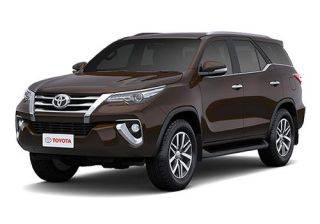
Reasons Why Toyota Fortuner is the king among luxury SUVs


Image result for TOYOTA


The Toyota Fortuner luxury SUV is going great guns. For instance, the Fortuner outsold the much cheaper Mahindra XUV500 in December 2017, and this wasn’t the first time something like this happened last year. On multiple occasions in 2017, the Fortuner has outsold much cheaper, and popular SUVs such the Mahindra XUV500 and Tata Hexa. 

The Toyota Fortuner also known as the Toyota SW4, is a mid-size SUV manufactured by Toyota. Originally assembled only in Thailand but later also in Indonesia and other countries, the Fortuner is built on the Toyota Hilux pickup truck platform. It features three rows of seats and is available in rear-wheel drive or 4 wheel drive. The Fortuner is part of Toyota IMV project in Thailand, which also includes the Toyota Hilux. Developed in large part by Toyota’s Thai operations, the Fortuner has piggybacked the success of the Hilux and is now built in a number of countries including Egypt, Pakistan, India, Argentina and Indonesia.

There are no of Reasons of FORTUNER DOMINANCE IN INDIAN MARKET :-


1.‘Fortuner’ brand

The Fortuner is a brand in itself. And in India once a car becomes a big brand and hits the top spot, it’s very hard to dislodge it. Which is perhaps why the Fortuner continues to be so popular, competition notwithstanding. When thinking of buying luxury SUVs, a lot of buyers blindly opt for Fortuner, not even considering the other options in the market. Such is the strength of the Fortuner brand.
Image result for toyota fortuner

2.Terrific resale value

Toyota consistently maintains high quality on its premium offerings such as the Fortuner and Innova Crysta. This results in long lasting vehicles, especially those built on the IMV (Fortuner & Innova) platform. People selling their Fortuners after 3-5 years get great resale value as buyers in the used car markets know that this SUV will last for quite a long time. This is another driving factor for people to opt for the Fortuner instead of the competition.

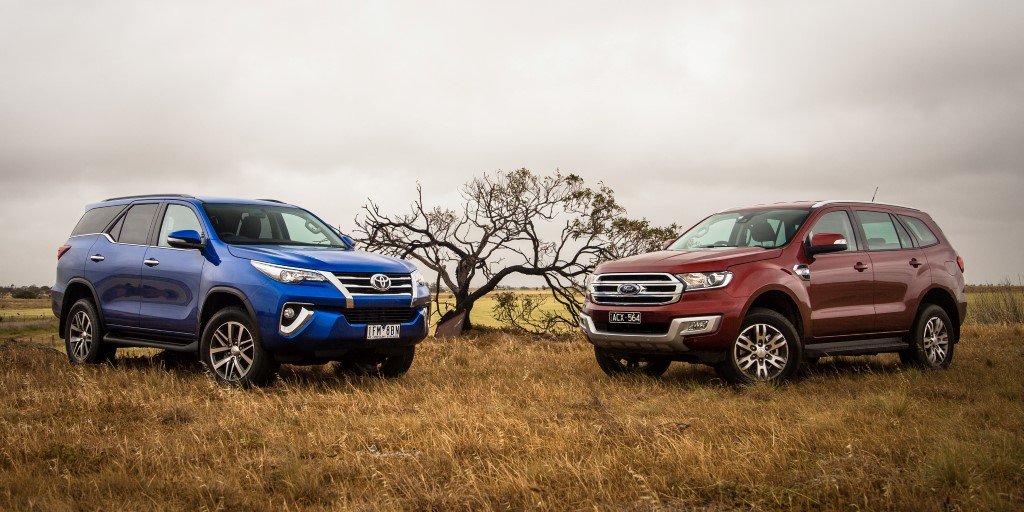
Image result for toyota fortuner vs ford endeavour 2017

3.Reliable & rugged

Toyota is known for its legendary reliability, and the Fortuner adds ruggedness to the equation. Parts on the Fortuner don’t fail easily, and the vehicle feels built to last for a lifetime. Together, this is a solid combination for success in the Indian market. And the consistently high sales numbers are testament to how big a success this luxury SUV is for Toyota.

4.Lots of variants

With the all-new Fortuner, Toyota expanded the variant line up, attracting a wider set of buyers. For those who don’t drive much, there’s a 2.7 liter petrol (164 Bhp-245 Nm) powered Fortuner, and for those looking at a lower price tag, there’s the entry-level diesel (174 Bhp-420 Nm) variant that offers a rear wheel drive layout and a manual gearbox to drive down the purchase price. There’s even a TRD kitted variant for those who want swanky looks from the big bruiser. All in all, there are 7 variants of the new Fortuner on sale, and this is something none of the SUV’s rivals can claim of.  Prices of the Fortuner start from Rs. 26.2 lakhs, going all the way up to Rs. 32 lakhs.

5.Street presence

The Fortuner, with new styling, still retains its imposing looks while managing to look sophisticated enough for the urban crawl. The vehicle fills up rear view mirrors of smaller cars, and has an intimidating personality on the street. For those looking for a true-blue SUV, the body-on-ladder frame based Fortuner ticks all the right boxes.
Image result for toyota fortuner

Tuesday, 16 January 2018

INDIA'S BLOCKBUSTER SELLING CARS 2017

Like a true petrol head, cannot tolerate lapsed scheduled services, hate when gear grind
and take more pride when talking about you own CAR then anything else.Here are three car( currently in showrooms), that according to their owners having no problems in crossing 1,50,000km successfully, here are the trio's ;-

MARUTI SUZUKI WAGON R -

That unassuming tall-boy of a car, which first made an appearance in the late 90s is still around. And there’s a huge reason behind it. Not only has it retained its popularity, but it’s quite a solid performer if you want it to serve you for what feels like forever.


HONDA CITY -
The which was a dream for every Indian since its launch comes with the 1.5-litre i-VTEC (petrol) engine has been around for quite some time, and it tends to stay as strong a performer after a few thousand of kilometers as it was new. While not as enthusiastic in delivering power as the original VTEC, the engine is quite refined, which can hide its age well. Earlier models came with slightly less ground clearance, which often resulted in a scraped underbelly when on bad roads. The new model (the current one and the update before this) has that issue resolved.Image result for honda city
TOYOTA INNOVA -
Given its extensive use in various jobs from big family vehicle to office cabs, the Innova can officially be called the people mover of India. It might not offer the most silent engine or car-like interior, but it does its job of ferrying people (of all shapes and sizes) well. And breaching the 1,50,000km mark that we’re talking about here isn’t big task for it, either.Image result for innova

Image result for swift
I feel very special for one the car and that is MARUTI SUZUKI SWIFT -
The consensus is that diesel vehicles begin to need substantial repairs in the engine department as they inch closer to the 1-lakh kilometer mark, but keep them healthy and they’ll be able to run for longer! The FIAT-derived 1.3-litre DDiS unit on the Swift diesel can continue well above the said mark, without needing any major work.

Monday, 15 January 2018

Comparison Between Petrol and Diesel Engine & Engine Overview.

Engine is something which converts the Heat Energy into Mechanical Energy, it can be said as a device which is provides power to machine to do the specific work.
Heat engine is a machine for converting heat, developed by burning fuel into useful work. It
can be said that heat engine is equipment which generates thermal energy and transforms it
into mechanical energy.

Classification of Heat Engine :-

1. Based on combustion of fuel:
(i) External combustion engine
(ii) Internal combustion engine.

External combustion engine

Here, the working medium, the steam, is generated in a boiler, located outside the engine and
allowed in to the cylinder to operate the piston to do mechanical work.

Internal combustion engine

In internal combustion engine, the combustion of fuel takes place inside the engine cylinder
and heat is generated within the cylinder. This heat is added to the air inside the cylinder and
thus the pressure of the air is increased tremendously. This high pressure air moves the piston
which rotates the crank shaft and thus mechanical work is done

2. Based on fuel used

1. Diesel engine
2. Petrol engine
3. Gas engine

Diesel engine – Diesel is used as fuel
Petrol engine – Petrol is used as fuel
Gas engines – propane, butane or methane gases are used

3. Based ignition of fuel

1. Spark ignition engine (Carburetor type engines)
2. Compression ignition engine ( injector type engines)

Spark ignition engine – a mixture of air and fuel is drawn in to the engine cylinder. Ignition of
fuel is done by using a spark plug. The spark plug produces a spark and ignites the air- fuel
mixture. Such combustion is called constant volume combustion (C.V.C.).
Compression ignition engine – In compression ignition engines air is compressed in to the
engine cylinder,. Due to this the temperature of the compressed air rises to 700-900 C. At this
stage diesel is sprayed in to the cylinder in fine particles. Due to a very high temperature, the
fuel gets ignited. This type of combustion is called constant pressure combustion (CP.C.)
because the pressure inside the cylinder is almost constant when combustion is taking place.

4. Based on working cycle

1. Four stroke cycle engine - When the cycle is completed in two revolutions of the
crankshaft, it is called four stroke cycle engine.

2. Two stroke cycle engine. - When the cycle is completed in one revolution of the
crankshaft, it is called two stroke cycle engine

CONSTRUCTION OF AN IC ENGINE

I.C. engine converts the reciprocating motion of piston into rotary motion of the crankshaft by
means of a connecting rod. The piston which reciprocating in the cylinder is very close fit in
the cylinder. Rings are inserted in the circumferential grooves of the piston to prevent leakage
of gases from sides of the piston. Usually a cylinder is bored in a cylinder block and a gasket,
made of copper sheet or asbestos is inserted between the cylinder and the cylinder head to
avoid ant leakage. The combustion space is provided at the top of the cylinder head where
combustion takes place. The connecting rod connects the piston and the crankshaft. The end of
the connecting rod connecting the piston is called small end. A pin called gudgeon pin or wrist
pin is provided for connecting the piston and the connecting rod at the small end. . The other
end of the connecting rod connecting the crank shaft is called big end. When piston is moved
up and down, the motion is transmitted to the crank shaft by the connecting rod and the crank
shaft makes rotary motion. The crankshaft rotates in main bearings which are fitted the
crankcase. A flywheel is provided at one end of the crankshaft for smoothing the uneven
torque produced by the engine. There is an oil sump at the bottom of the engine which
contains lubricating oil for lubricating different parts of the engine.

WORKING PRINCIPLE OF I.C. ENGINE/ FOUR STROKE CYCLE ENGINE / TWO
STROKE CYCLE ENGINE

A mixture of fuel with correct amount of air is exploded in an engine cylinder which is closed
at one end. As a result of this explosion, heat is released and this heat causes the pressure of
the burning gases to increase. This pressure forces a close fitting piston to move down the
cylinder. The movement of piston is transmitted to a crankshaft by a connecting rod so that the
crankshaft rotates and turns a flywheel connected to it. Power is taken from the rotating crank
shaft to do mechanical work. To obtain continuous rotation of the crankshaft the explosion has
to be repeated continuously. Before the explosion to take place, the used gases are expelled
from the cylinder, fresh charge of fuel and air are admitted in to the cylinder and the piston
moved back to its starting position. The sequences of events taking place in an engine is called
the working cycle of the engine. The sequence of events taking place inside the engine are as follows -

1. Admission of air or air-fuel mixture inside the engine cylinder ( suction )

2. Compression of the air or air fuel mixture inside the engine (compression)

3. Injection of fuel in compressed air for ignition of the fuel or ignition of air-fuel mixture
by an electric spark using a spark plug to produce thermal power inside the cylinder
(power )

4. Removal of all the burnt gases from the cylinder to receive fresh charge ( exhaust)

(Note: Charge means admitting fresh air in to the cylinder in the case of compression
ignition engines ( diesel engines ) or admitting a mixture of air and fuel in to the
cylinder in the case of spark ignition engines.)

COMPARISON OF DIESEL ENGINE WITH PETROL ENGINE -

DIESEL ENGINE -

1.It has got no carburetor, ignition coil and spark
plug.
2.Its compression ratio varies from 14:1 to 22:1.
3.It uses diesel oil as fuel.
4.Only air is sucked in cylinder in suction stroke.
5.It has got „fuel injection pump‟ and injector
6.Fuel is injected in combustion chamber where
burning of fuel takes places due to heat of
compression.
7.Thermal efficiency varies from 32 to 38%
8.Engine weight per horse-power is high.
Operating cost is low.
9.Compression pressure inside the cylinder varies.

PETROL ENGINE -

1.It has got carburetor, ignition coil & spark plug.
2.Its compression ratio varies from 5:1 to      8:1.
3.It uses petrol (gasoline) or power kerosine as fuel.
4.It has got no fuel injection pump and
injector, instead it has got carburetor and
ignition coil.
5.Air fuel mixture is compressed in the
combustion chamber when it is ignited by
an electric spark.
6.Thermal efficiency varies from 25 to 32%
7.Engine weight per horsepower is
comparatively low.
8.Operating cost is high.
9.Compression pressure varies from 6 to  10.

Saturday, 13 January 2018

Scooter Scenario In INDIA

Scooters are considered to be one of the most effective innovation in Automobile Industry and that too a Gearless Scooter. With ease in handling and Durability and Approximately Zero Maintenance charges, they are one of the Most selling Two wheelers in India. Taking an Example of Honda, Honda Launched Activa On 2000 since then it was a hot cup cake in the Industry.

In April, 2014, The Economic Times reported the Honda Activa became the best selling two Wheelers in India (if not the world) out running the Hero Splendor. During the month of September 2013, 141,996 Honda Activa scooters were sold; nearly equal to Honda's entire annual sales in North America.

In the same year on April 2014, Honda launched an upgraded model of Activa with a 125cc engine and rebranded the model as Activa 125. Currently, both Activa-i and Activa 125 are sold in India.

Not Just Honda but Every Two wheeler manufactures are now concentrating on Scooter Segment, this can be understood by a very simple Example of Aprilia, Aprilia is Giant Automotivecompany With Renowned brand Image all over the World is focusing Now on Indian Scooter Segment to Establish it's name In indian two wheeler Market. With it's products SR150 and SR150 R, They are doing Innovation and Changing the mindset of consumer in india which is exceptionally well !

To conclude I Must say that Scooters not has great advantages over motorcycles but they do resembles the Resistance and Robustness over the Developing Indian Roads (Bad Roads) and Driving Sense of Today's population.

Friday, 12 January 2018

History & Difference Between BS-III & BS-IV Engines

DIFFERENCE BETWEEN BS-III EMISSION NORMS & BS-IV EMISSION NORMS

There is Lot Of Confusion Between BS III & BS IV ENGINES/VEHICLES Bharat Stage (BS) is an emission norm which is regulation in India for automobile manufacturers. Basically BS-4 is regulation for everything that is emitted from vehicle. The regulations not only covers exhaust emission but for evaporation emission, light emission, noise emission, tyre gas emission and perhaps a few more.

History

The first emission norms were introduced in India in 1991 for petrol and 1992 for diesel vehicles. These were followed by making the Catalytic Converter mandatory for petrol vehicles and the introduction of unleaded petrol in the market.
On 29 April 1999 the Indian Supreme Court ruled that all vehicles in India have to meet Euro I or India 2000 norms by 1 June 1999 and Euro II will be mandatory in the North Capital Region by April 2000. Car makers were not prepared for this transition and in a subsequent judgement the implementation date for Euro II was not enforced.
In 2002, the Indian government accepted the report submitted by the Mashelkar committee. The committee proposed a road map for the roll out of Euro Based emission Norms for India. It also recommended a phased implementation of future norms with the regulations being implemented in major cities first and extended to the rest of the country after a few years.
Based on the recommendations of the committee, the National Auto Fuel policy was announced officially in 2003. The roadmap for implementation of the Bharat Stage norms were laid out till 2010. The policy also created guidelines for auto fuels, reduction of pollution from older vehicles and R&D for air quality data creation and health administration.

INDIAN EMISSION STANDARD (2 & 3 WHEELERS)    
StandardReferenceDate
Bharat Stage IIEuro 21 April 2005
Bharat Stage IIIEuro 31 April 2010
Bharat Stage IVEuro 41 April 2017
Bharat Stage VIEuro 6April 2020 with mandate (proposed)

Bharat Stage III & Bharat Stage IV For (Two Wheelers)
Changes from BS3 to BS4 for motorcycles are more than just tailpipe emissions. Regulations also (for the first time) restrict evaporation emissions from fuel tanks, which mean a new breather value and additional or changed stamps in the body structure or additional brackets that hold these new systems. This is very difficult to retrofit considering the fact that major design changes might be needed.
 
Coming to tail pipe emissions, BS4 motorcycles in most cases require larger catalytic converters in terms of flow volumes to eliminate harmful nitrogen based gasses. And although that could be adapted within the exhaust system, most bikes also need a secondary airflow system that adds oxygen (or natural air) to the exhaust stream just before the catalytic convertors. This of course, is a more complex system for which retro fitment is more difficult. Many manufacturers have also resorted to a more complex ECU and ignition control setup that has more than the standard idle map and full throttle map for a better control of the ignition timing which in turn makes for a cleaner burn and thus, less pollution. The byproduct of this is also a more linear acceleration curve and better fuel economy.


Top Fuel Efficient Cars In India

If planning to Buy Petrol Car Then The below-mentioned cars is for you :) Below is the list of most fuel-efficient petrol cars on sale ...